In the Gulf Cooperation Council (GCC), the approach to residency is undergoing significant transformation. For years, the most common route to living in the GCC was through employment and sponsorship. Today, investors, entrepreneurs and highly skilled professionals have more options to establish a long-term base in the region without depending entirely on an employer.
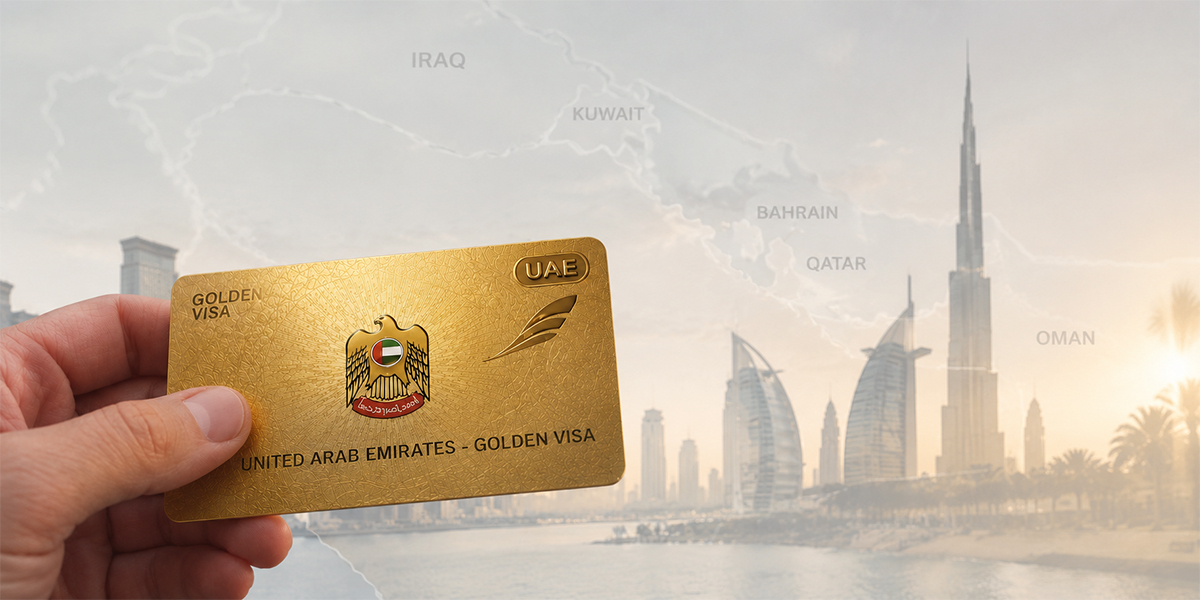
The UAE’s introduction of its Golden Visa in 2019 accelerated this shift. Since then, long-term and investment-linked residency options have expanded across Saudi Arabia, Qatar, Bahrain, Oman and, more recently, Kuwait.
Let’s explore how each nation is adapting its residency policies to attract global talent and investment.
The UAE as a Model for Golden Visas
The introduction of the UAE’s Golden Visa in 2019 has accelerated the shift towards more inclusive residency options. This program allows individuals and families to secure long-term, renewable residency across a variety of categories, including property investors, entrepreneurs, and specialized professionals.
For property investors, the minimum investment threshold is AED 2 million. Additionally, doctors, scientists, artists, and other specialized talents can also qualify under different categories.
The UAE‘s continuous expansion of this program, especially towards creators and high-value professionals, shows how long-term residency can achieve multiple economic objectives, such as attracting capital and retaining expertise.
Saudi Arabia’s Distinct Premium Residency Approach
Saudi Arabia‘s Premium Residency program showcases the Kingdom’s unique economic priorities. Rather than replicating the UAE model, this program offers various pathways, including limited-duration and permanent residency options.
Applicants can secure permanent residency with a one-time fee of SAR 800,000, while those interested in investment-linked categories must make a qualifying property investment of at least SAR 4 million or a business investment of at least SAR 7 million, subject to additional requirements.
Since its expansion in January 2024, the program has attracted considerable interest, with over 40,000 applications submitted, indicating a wider recognition of Saudi Arabia as a long-term market for investors.
Qatar and Bahrain: Lowering Access Barriers
In an effort to attract diverse international residents, both Qatar and Bahrain are lowering barriers to residency.
Qatar now offers residency without the need for a local sponsor through qualifying property investments starting at QAR 730,000, with higher investments granting access to a permanent residency framework. Additionally, Qatar has introduced a separate residency route aimed at entrepreneurs to further enhance its appeal.
Bahrain has similarly made steps by reducing the property requirement for its ten-year Golden Residence from BHD 200,000 to BHD 130,000. This program also accommodates selected retirees, long-term residents, and exceptional talent, reflecting a broader strategy to attract a diverse range of international residents.
Oman and Kuwait Expand Residency Options for Investors
Oman and Kuwait are joining the trend of expanding residency programs aimed at investors.
Oman renewed its Investor Residency program in 2025, providing a renewable ten-year permit with multiple qualifying investment routes, and has made significant reforms to encourage foreign property ownership.
Meanwhile, Kuwait has recently introduced an investor-focused residency framework, offering up to ten years for qualifying real estate investors and up to 15 years for business investments. However, the requirements in Kuwait tend to be stricter compared to its neighboring countries.
There is no single “GCC Golden Visa”
Despite the common label, investors should not treat these programs as interchangeable.
One country may offer a lower property threshold. Another may provide permanent status. Others may prioritize entrepreneurs, established businesses or specialized talent.
The choice therefore depends heavily on the applicant’s objective: property investment, business expansion, permanent residency, flexibility or access to a particular market.
GCC countries are competing for many of the same internationally mobile investors and professionals, but they are building different propositions to attract them.
Residency and citizenship remain very different
There is also one major limit to the Golden Visa story.
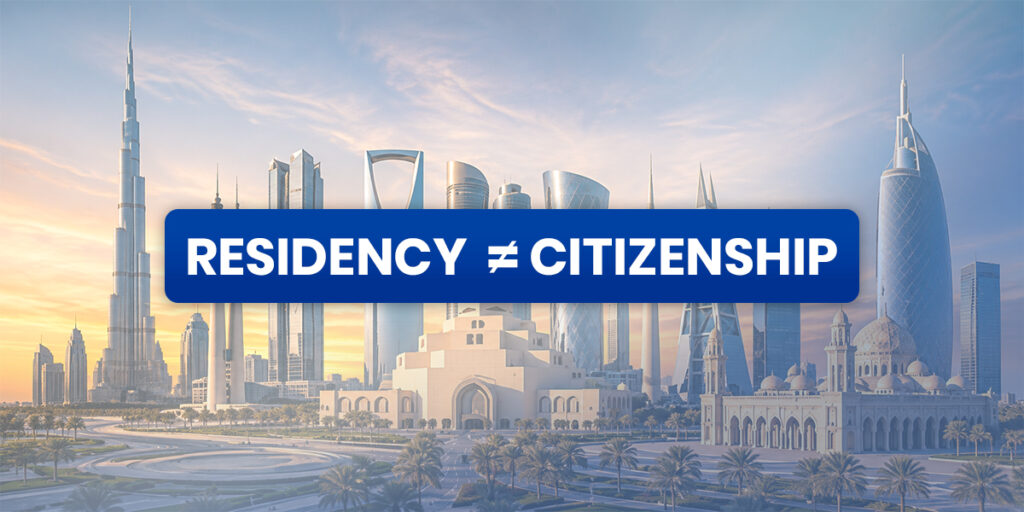
Long-term residency does not automatically lead to a GCC passport.
None of the six GCC countries currently operates a standard citizenship-by-investment program. Even where permanent residency is available, citizenship remains separate, and naturalization is ultimately governed by national law and state discretion.
For international investors, the distinction matters. These programs should primarily be viewed as opportunities to secure a long-term base in the Gulf and not as a guaranteed route to nationality.