

The Gulf is known for setting global standards in connectivity. Its latest move toward 6G marks a crucial moment,not just for the Middle East but for the future of wireless technology worldwide. After leading early 5G deployment, GCC nations are now laying the groundwork for a new era of ultra-fast, smart networks that blend the physical and digital worlds.
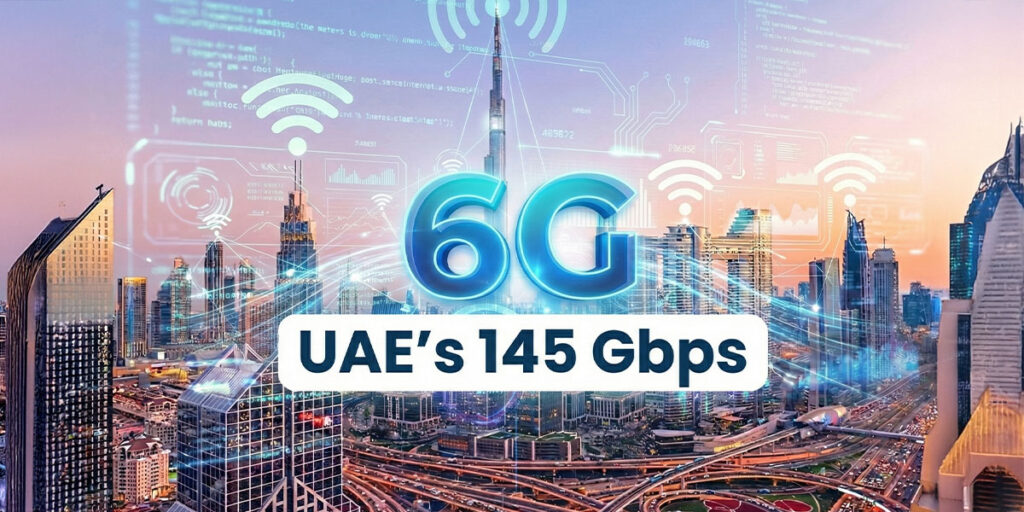
A key moment in this shift is the UAE’s remarkable achievement: the Middle East’s first 6G Terahertz pilot, completed by e& UAE and NYU Abu Dhabi at an impressive 145 Gbps. That speed is more than just “faster internet.” It hints at a new technological reality.
The UAE’s 145 Gbps Breakthrough
At 145 Gbps, about 20 times faster than today’s best 5G connections, the UAE’s Terahertz achievement shows that networks can sense their surroundings, support autonomous mobility, and enable holographic communication with almost no delay. These capabilities were once seen only in science fiction. Now they are becoming a reality in Abu Dhabi’s labs.
This milestone signals that the UAE aims to compete with established research leaders in the US, Japan, and South Korea in shaping global 6G standards. With collaboration between universities and businesses, the country is entering the next phase of its digital power: smart, AI-driven connectivity.
A Region Advancing Ahead of Global Standards
Across the GCC, the shift to next-generation wireless has been in the works for years. Qatar demonstrated its readiness with the world’s first 5G-enabled FIFA World Cup. Saudi Arabia rolled out nationwide 5G in over 75 cities. The UAE and Kuwait built some of the earliest standalone 5G cores. Bahrain and Oman improved their spectrum policy and research pipelines.
This early start is significant. It gives the Gulf an advantage as it moves into 5G-Advanced; a step that turns 5G from a fast network into a key digital platform for smart cities, autonomous logistics, immersive entertainment, and industrial automation.
Partnerships Driving the GCC’s Next Leap
The Gulf’s telecom progress is being fueled by a strong network of global technology partnerships. Each is helping to expand advanced connectivity across the region. From AI-driven radio systems and cloud-native cores to massive MIMO, slicing, RedCap IoT, and edge intelligence, leading companies are integrating the GCC into the world’s most ambitious telecom plans.
Ericsson, Nokia, Huawei, Juniper Networks, Airgain, and others are working with operators like e&, du, Ooredoo, Zain, stc, Batelco, Vodafone Qatar, and Omantel to push the limits of network automation, multi-cloud connectivity, 5G-A capabilities, and pre-6G experimentation.
As a result, next-generation capabilities are scaling rapidly.
Why 5G-Advanced Matters Before 6G Arrives
Before 6G becomes a reality, 5G-Advanced will change what wireless networks can do. Instead of just moving data, networks will start to understand it. They will manage resources on their own, lower energy use, and operate in environments where millions of devices can work together with near-perfect reliability.
5G-A enables:
– Lifelike extended reality and smart entertainment
– Fully equipped factories and logistics areas
– Real-time diagnostics and digital twins
– Autonomous drones and vehicles
– Satellite-supported coverage in remote areas
– Ultra-low latency for precision robotics
These capabilities are real and available. Kuwait has already introduced commercial 5G-A, and the UAE is launching early versions of it on live networks.
The region is preparing its infrastructure well before global mass adoption begins.
Industry 4.0: The Gulf’s Emerging Competitive Edge
The arrival of RedCap and eRedCap technology is broadening the Gulf’s industrial IoT landscape. Lightweight 5G modules are enabling smarter grids, wearable devices, automated surveillance, advanced manufacturing lines, and energy-efficient industrial systems, where Saudi Arabia, Qatar, the UAE, and Oman are positioning themselves as global leaders.
For nations aiming to be world-class logistics hubs, renewable energy centers, and advanced manufacturing clusters, 5G-A and RedCap are essential. They form the backbone of Industry 4.0 in the GCC, cutting downtime, enhancing quality control, automating supply chains, and supporting the vast device networks needed for future smart cities.
Research Labs Building the Gulf’s 6G Vision
Alongside commercial launches, GCC universities and research institutions are laying the groundwork for the 6G era. Their focus includes the terahertz spectrum, quantum networking, reconfigurable intelligent surfaces, free-space optics, and distributed network intelligence.
-Qatar is working with NASA and Quantinuum.

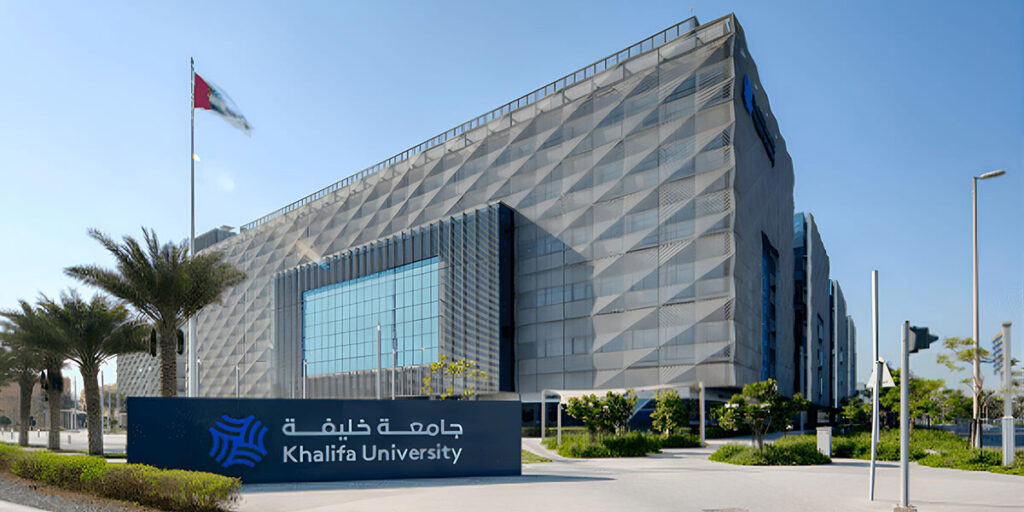
-Khalifa University in the UAE has launched its 6G Research Center and developed TelecomGPT.
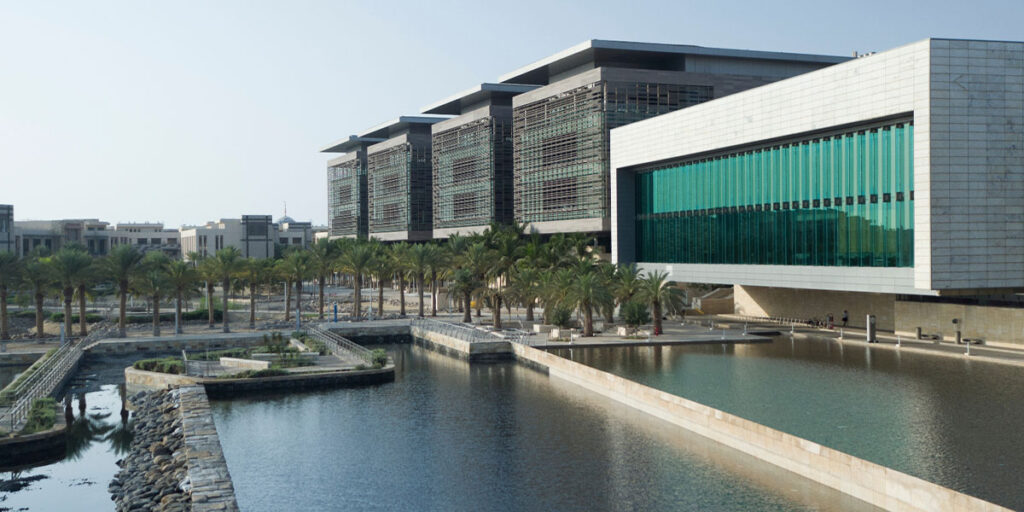
-KAUST in Saudi Arabia is conducting advanced 6G research with Ericsson.
-Bahrain is preparing for early trials and establishing a semiconductor line for next-generation wireless.

The Gulf is building a research ecosystem that can influence regional networks and global 6G frameworks.
What 6G Actually Means for the Next Decade
The promise of 6G goes much further than faster downloads. When fully developed, 6G could allow for:
– Holographic telepresence
– Multisensory communication
– Battery-free IoT devices
– AI-driven transport systems
– Integrated sea, air, ground, and space networks
– Digital duplicates of cities and industries
– Nano-IoT for health and environmental monitoring
For a region investing heavily in self-driving transport, aerospace, national digital twins, and independent satellite systems, 6G represents a key advantage.
But all of this relies on strong 5G-A growth today. The two generations will continue to evolve side by side until 2030, setting the stage for early 6G commercial rollouts.
A Future Being Built, Not Awaited
With the UAE’s 145 Gbps Terahertz pilot, Kuwait’s commercial 5G-A launch, Saudi Arabia’s industrial deployments, and the region’s growing academic framework, the GCC is now setting the pace for a 6G-ready future.