
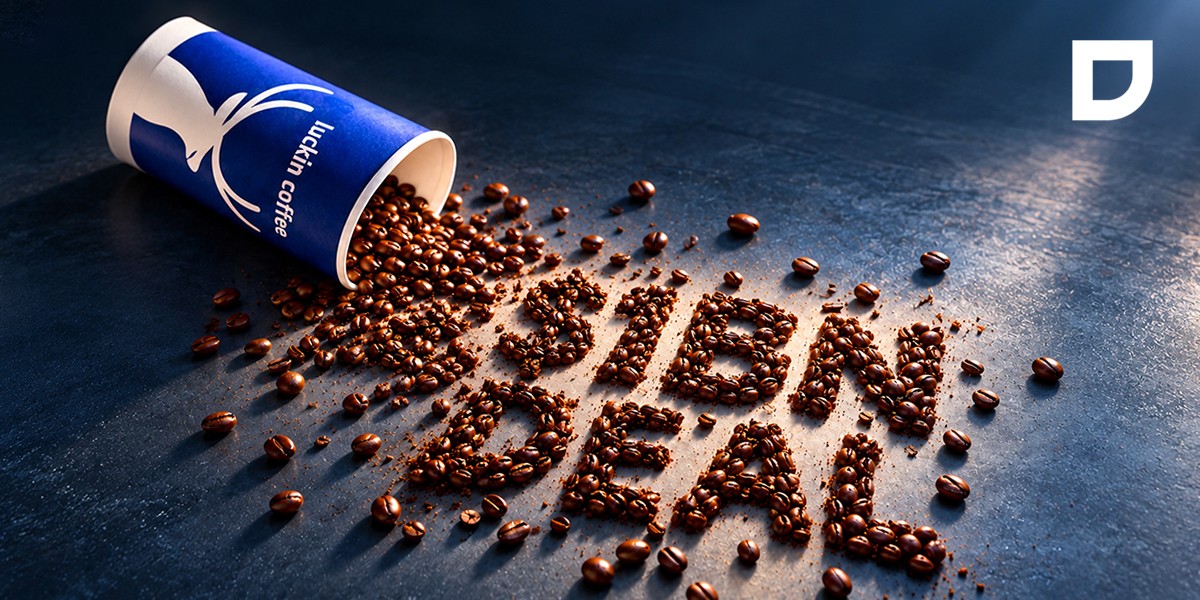
When an Abu Dhabi sovereign investor puts money into a Chinese coffee chain as part of a $1 billion transaction, the story is bigger than coffee.
In September 2026, Mubadala Investment Company announced a significant minority investment in Luckin Coffee alongside its controlling shareholder, Centurium Capital. The transaction has a total value of approximately $1 billion, although Mubadala has not disclosed the exact size of its individual investment.
The deal gives Mubadala greater exposure to China’s enormous consumer market and brings together two very different growth stories: Abu Dhabi’s expanding global investment portfolio and Luckin Coffee’s rapid comeback and expansion.
First, Who Is Luckin Coffee?
Outside China, Luckin Coffee may still be unfamiliar to many consumers. Inside the country, it has become one of the biggest names in coffee.
Founded in 2017, Luckin built its business around convenience, competitive pricing and a technology-driven retail model. Ordering and payments are heavily digital, while customer data supports everything from product development to store operations.
Luckin ended 2025 with 31,048 stores, after opening a net 8,708 locations during the year. By May 2026, its global network had already passed 35,000 stores.
Its 2025 revenue reached approximately $7 billion, up 43% year-on-year, while average monthly transacting customers reached 94.2 million.
This scale is one reason the Mubadala deal matters. Abu Dhabi is not simply investing in another coffee brand. It is buying exposure to a large consumer platform with an extensive physical network and a deeply digital business model.
A Comeback Few Expected
After listing on Nasdaq in 2019, the company disclosed in 2020 that employees had fabricated approximately $300 million in sales. The scandal led to its delisting, US bankruptcy proceedings and a major restructuring.
What followed was a significant turnaround.
With Centurium Capital’s backing, Luckin rebuilt its business, continued opening stores and eventually overtook Starbucks as China’s largest coffee chain by sales.
That makes Mubadala’s investment particularly interesting. It is entering after a period in which Luckin moved from one of China’s most high-profile corporate failures to a business generating billions in annual revenue and continuing to expand.
Why Is Mubadala Investing in Coffee?
The answer is less about coffee itself and more about consumer growth.
China remains one of the world’s largest consumer markets, with coffee consumption growing as more consumers turn to freshly brewed coffee and existing customers drink it more frequently. Mubadala specifically pointed to the long-term opportunity it sees in China’s consumer sector when announcing the investment.
Luckin also offers something increasingly valuable to investors: scale combined with data.
Its technology-enabled model uses data across customer engagement, product development and store operations, allowing the company to react quickly to changing consumer preferences.
Its menu has also expanded well beyond conventional coffee. By May 2026, sales of Luckin’s non-coffee beverages had passed RMB 20 billion (around $2.8 billion), while products such as its Coconut Latte had sold more than 2.1 billion cups.
For an investor, that creates exposure not only to coffee consumption but to a broader and fast-moving beverage market.
This Is Not Mubadala's First Move Into China
The Luckin Coffee investment also fits into a much longer strategy.
Mubadala has been investing in China since 2015 and has deployed more than $20 billion in the country. Previous investments include e-commerce company Shein and Dalian Wanda’s shopping mall business, and Mubadala established a Beijing office as it expanded its presence in the market.
From e-commerce and shopping centres to one of China’s biggest coffee businesses, Mubadala has been building exposure to different parts of Chinese consumer spending.
The Luckin transaction will also give Mubadala the ability to nominate a director to the company’s board, giving the investor a role beyond simply providing capital.
From Abu Dhabi to China's Consumer Economy
For Abu Dhabi, investments such as Luckin are part of a broader strategy of positioning capital internationally and building exposure to industries and markets capable of generating long-term returns.
And the Luckin deal shows that diversification does not always have to mean investing in the newest technology or emerging industry.
Sometimes, the opportunity is found in an everyday product, provided the business behind it has the scale, consumer demand and growth potential to make it interesting.
Luckin Coffee has gone from a startup founded in 2017, through a major corporate crisis, to a network of more than 35,000 stores.
Now, Abu Dhabi capital is joining its next chapter.
For Mubadala, the investment is another step deeper into China’s consumer economy. For Luckin, it brings another major global investor behind its continued expansion.
And for the wider investment market, the deal is a reminder that some of the biggest opportunities can sit behind something as simple as a cup of coffee.